
The Competitive Advantage of Templates
The best entrepreneurs don’t build everything from scratch. They’re strategic about where they invest time and money. Templates enable this strategy.
The Real Cost of Building From Scratch
Time: 200+ hours for a website, 60+ hours for branding, 40+ hours for marketing materials.
That’s 300+ hours you’re not spending on:
- Customer acquisition
- Product development
- Revenue-generating activities
- Strategic planning
At $50/hour contractor rate: $15,000 in value lost.
For a founder making $100/hour equivalent: $30,000+ in lost opportunity cost.
Build from scratch on principle, and you’ve just made a financially terrible decision.
The Template Advantage
Speed to Market:
- Launch in weeks, not months
- Test ideas quickly
- Validate before heavy investment
- Stay ahead of competition
Cost Control:
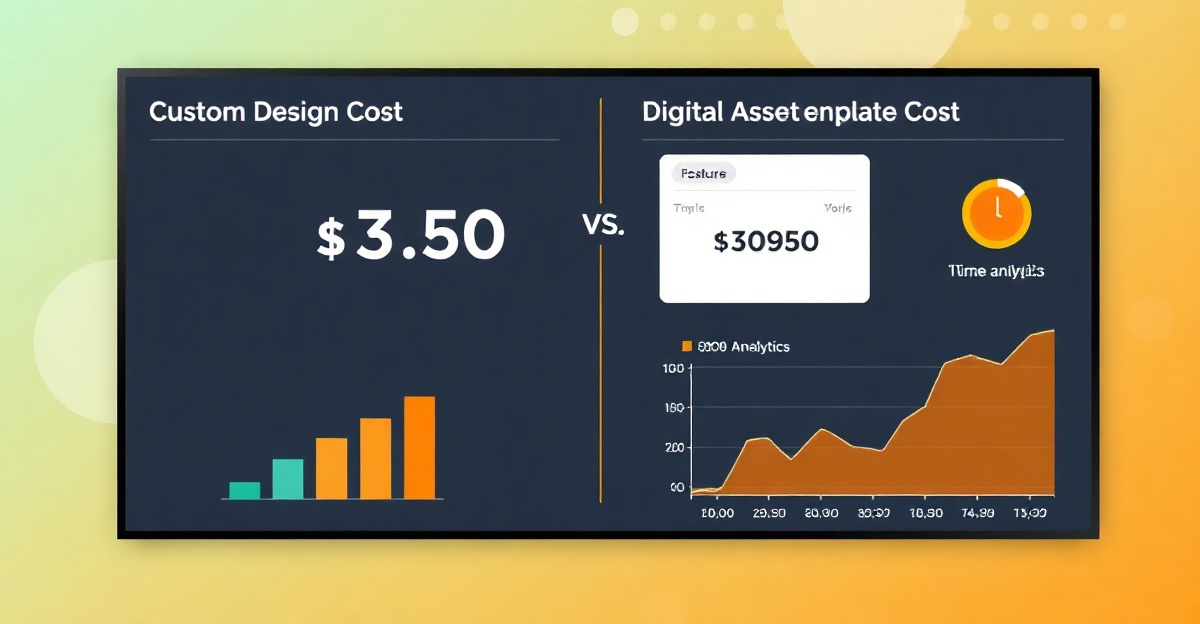
- $50–$200 instead of $5,000–$15,000
- No redesign costs later (you control evolution)
- Free iterations without designer fees
Focus on Core Business:
- Design is commoditized (templates are good enough)
- Your advantage is strategy, not design skill
- Spend energy on what only you can do
Scalability:
- Easy to adapt for new products
- Quick to refresh for new campaigns
- Template variations for different markets
What Smart Entrepreneurs Focus On
They use templates for:
- Standard Marketing Materials (websites, email, social templates, presentations)
- Non-Differentiating Work (invoices, proposals, contracts, procedures)
- Time-Sensitive Projects (need something fast)
- Validation Projects (testing before committing)
They invest custom resources for:
- Unique Brand Elements (logo, core identity)
- Revenue-Critical Flows (checkout, customer experience)
- Competitive Differentiation (what makes them different)
- High-Volume/High-Impact Work (what drives significant revenue)
This balance maximizes impact while controlling costs.
The Template Mindset
Common False Belief: “Using a template is cheap/unprofessional.”
Reality: Using a template while competitors waste months building from scratch is a competitive advantage. You’ll be further ahead by the time they’re done with their custom design.
Professional Appearance: A professionally customized template often looks better than mediocrely executed custom design. Execution matters more than origin.
Real-World Examples
Successful solopreneurs leveraging templates:
- Consultant with 5 template-based lead magnets (PDFs, checklists, templates)
- SaaS founder launching side-project with template website
- Course creator using template email sequence and sales page
- Agency owner with template proposal and invoice systems
All focus their energy on:
- Sales and customer acquisition
- Product development and delivery
- Customer success and retention
- Strategic growth
They don’t focus on design because that’s not their competitive advantage.
When to Invest Custom
These situations warrant custom work:
1. It’s Your Competitive Advantage If design is your business (design agency, Shopify store, etc.), invest in custom work.
2. It Moves the Revenue Needle If a better checkout experience would increase conversion 10%, that investment pays for itself.
3. You’ve Validated and Scaling After template test succeeds, scaling might warrant custom optimization.
4. Brand Perception Is Critical If luxury or premium positioning requires bespoke work, invest.
5. High Volume/Repetition If you repeat a task 1000x, custom solutions might be worth it.
The Process
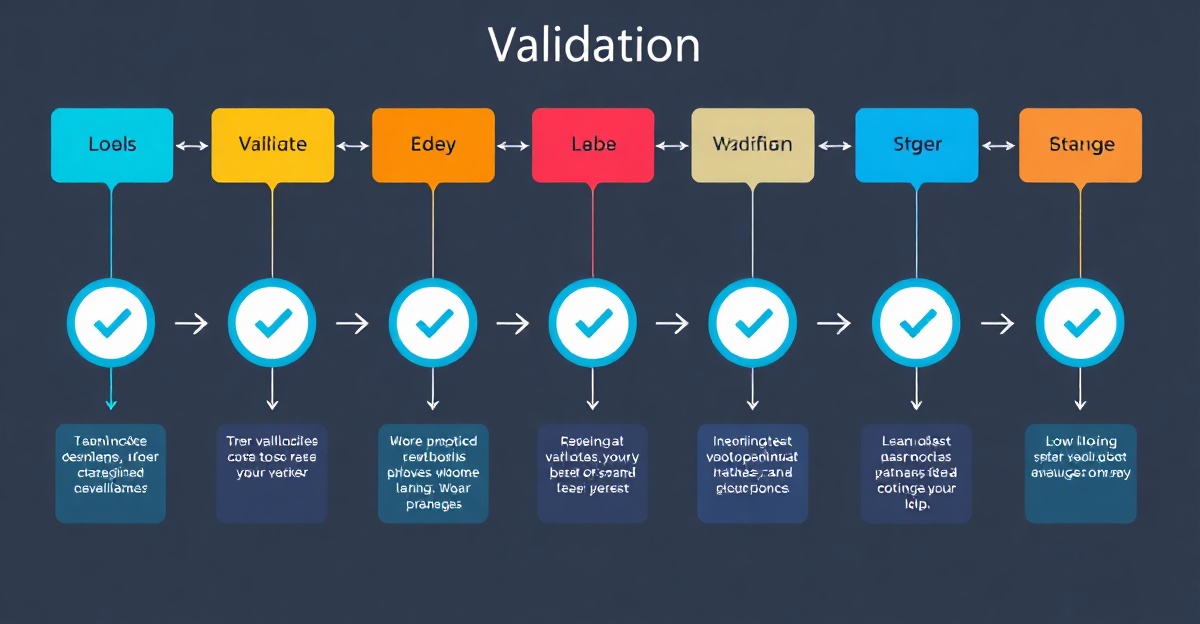
Smart entrepreneurs follow this sequence:
- Test with template (2–4 weeks, minimal cost)
- Validate concept works (measure results, get feedback)
- If successful, consider custom (now you know it’s worth investing in)
- If unsuccessful, pivot quickly (you didn’t waste months/money)
This is how successful businesses actually operate. They test with cheap, fast tools. Once something proves valuable, they invest in optimization.
The Execution Question
Here’s what separates successful template users from unsuccessful ones:
Successful: Strategic customization. They:
- Understand their brand
- Customize intelligently
- Add their unique personality
- Polish the final product
Unsuccessful: Lazy application. They:
- Use templates as-is (no customization)
- Don’t add their own content
- Maintain template defaults (including sample text, colors)
- Deliver something that looks templated
The template is the foundation. Your strategy, content, and polish are what make it yours.
Templates + Strategy = Winning Combination
The reality of 2026 business:
- Templates democratize access to professional tools
- Execution and strategy differentiate successful entrepreneurs
- Custom design has limited ROI for most businesses
- Speed and testing matter more than perfection
Your competitive advantage isn’t a custom website design. It’s your:
- Understanding of your market
- Execution speed
- Customer focus
- Continuous iteration
- Strategic decision-making
Templates enable all of these.
The Numbers Don’t Lie
Custom design approach:
- 16 weeks to launch
- $10,000 investment
- One iteration (redesign costs thousands more)
Template approach:
- 2 weeks to launch
- $500 investment
- 20 iterations (low cost to test, refine, improve)
Which approach leads to better results? Probably the one testing 20 different approaches.
Your Strategy
Stop waiting for perfect design. Use a template:
- Reduce time to market
- Test your idea
- Validate demand
- Keep costs low
- Stay nimble
Once you’ve proven the model works, invest custom resources where they actually move the needle.
That’s how smart entrepreneurs think.
Your Move: What could you launch in 2 weeks using a template that would take 3 months to custom build? What’s your plan for testing that idea?