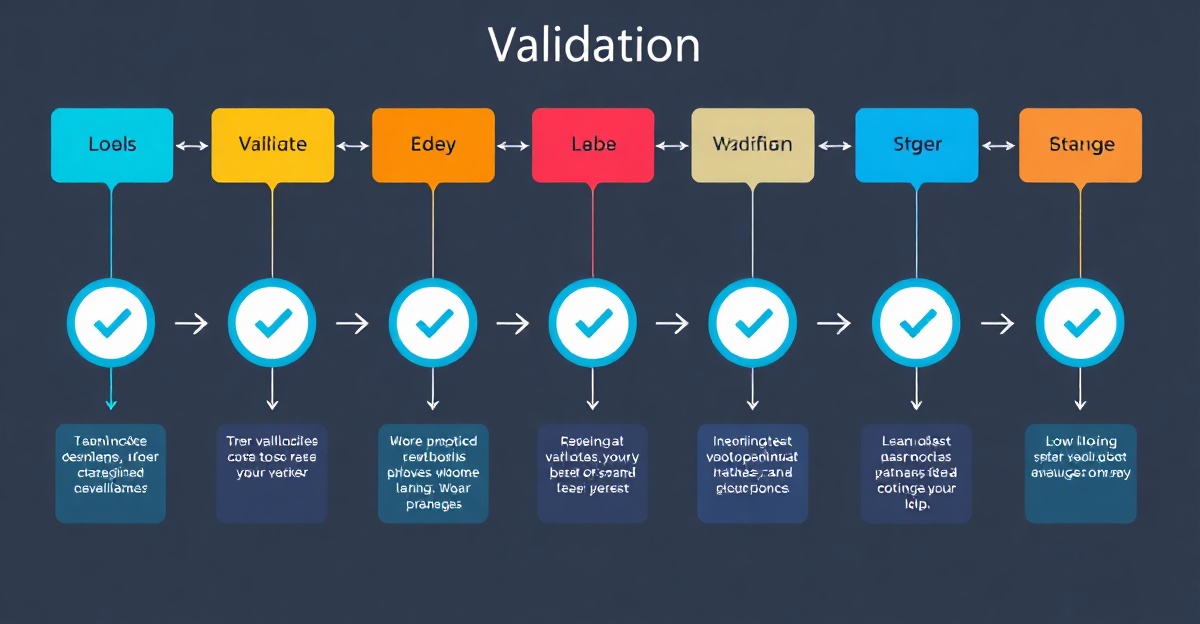
Don’t Build Without Validating First
Most digital products fail not because they’re poorly made, but because they solve problems nobody has. Validation prevents this waste. Here’s how to do it right.
Step 1: Define Your Target Customer (Not Everyone)
Wrong: “This product is for anyone interested in digital design”
Right: “This product is for freelance designers earning $30k–$60k/year who struggle with client management and want to raise their rates”
The more specific, the better. You’re not trying to appeal to the broadest audience—you’re solving a specific problem for a specific person.
How to Do It:
- Who struggles most with this problem?
- What’s their income level?
- Where do they hang out (online or offline)?
- What’s their biggest frustration?
Write a one-page description of your ideal customer. Get specific. The vague doesn’t validate.
Step 2: Research Existing Solutions
Never assume you’re the first to address a problem. Existing solutions reveal:
- How your idea compares
- What people are already paying
- What works and what gaps remain
- Whether real demand exists
Research Process:
- Google your idea and read what comes up
- Look at Amazon, Gumroad, and marketplaces
- Check competitor pricing and reviews
- Read 1-star reviews (they reveal real pain points)
- Look at subreddits and forums in your niche
What You’re Looking For:
- Is anyone else solving this? (If not, maybe there’s no demand)
- Are people complaining about existing solutions?
- What do reviews highlight as missing?
- How much are people paying?
Step 3: Talk to Your Target Customer
This is the most important step. Don’t assume—ask real people.
Who to Interview:
- Find 5–10 people who fit your target customer profile
- Focus on quality, not quantity
- Go for depth of understanding, not breadth
Where to Find Them:
- Reddit communities
- LinkedIn (message them directly)
- Facebook groups
- Twitter/X in your niche
- Slack communities
- Local meetups
The Conversation: Don’t pitch your idea. Ask about their problem.
Good questions:
- “What’s your biggest struggle with [problem area]?”
- “How do you currently solve this?”
- “What would an ideal solution look like?”
- “How much time/money does this problem cost you annually?”
- “What would you pay for a solution?”
Bad questions:
- “Would you buy my product?” (They’ll say yes to be nice)
- “Do you like my idea?” (They’ll be polite, not honest)
- Any yes/no question (Get them to tell stories)
Step 4: Gauge Real Interest (Not Hypothetical)
People are nice. They’ll say “yes, that sounds useful” even if they wouldn’t buy.
Real Validation Requires Action:
Pre-sell: Create a simple landing page describing your product. Ask people to enter their email to be notified when it launches.
- If you get 10% of your interviewed customers to sign up, you have validation
- If you get <3%, you might have a problem
Waitlist: Offer early-bird pricing or bonuses for people who commit before launch.
- Real customers will commit (with their email)
- People who “might be interested” won’t
Money Test: Ask people to pay something before you build.
- Even $1 pre-orders reveal real interest
- If people won’t pay before launch, they won’t pay after
Time Test: Ask potential customers for their time (feedback, interviews, testing).
- If they won’t give time to help develop a product they want, that’s telling
Step 5: Calculate Viability
Even with validated demand, you need realistic financials.
The Math:
- How many customers do you realistically need?
- At what price point do you break even?
- How many hours to build?
- What’s your hourly effective wage?
Example:
- Price: $97
- Minimum to break even: 20 customers (for 20 hours of work, $97)
- Realistic customers (5% of audience you can reach): ~50
- Profit: $4,850
- Hours to build: 40
- Hourly rate: ~$121/hour after expenses
If the numbers don’t work, either:
- Find a bigger market
- Increase price
- Reduce development scope
- Accept it’s a smaller project
Red Flags (Stop and Rethink)
- Customers won’t pre-order: They don’t want it enough
- Price resistance is high: You’re aiming at the wrong audience
- Existing solutions have great reviews: Hard to displace
- Target customers are hard to find: Small market
- Financials don’t work: Not viable
Green Lights (Proceed With Confidence)
- People voluntarily sign up (without heavy persuasion)
- Customers pre-order (actual money committed)
- Interviews reveal deep frustration (real problem)
- Target customers are easy to reach (accessible market)
- Financials look reasonable (viable business)
Common Mistakes
Skipping Customer Interviews: You think you know your customer. You don’t. Talk to them.
Talking to Friends: Friends lie to be nice. Talk to strangers who’ve never met you.
Validating Interest in the Idea: Customers care about solving their problem, not about your brilliant idea.
Waiting to Build: You don’t need a perfect product to validate. A rough prototype works.
Assuming No Competitors Means Big Opportunity: Sometimes no competitors means no demand.
The Minimum Viable Validation
You need:
- ✓ Defined target customer (specific, not broad)
- ✓ 5+ customer interviews (showing real frustration)
- ✓ 3+ pre-orders or signup commitments (real interest)
- ✓ Realistic financial model (breakeven math checks out)
If you have all four, you’re ready to build confidently.
The Timeline
This entire validation process takes 1–2 weeks, not months. Don’t delay:
- Day 1–2: Define customer, do competitive research
- Day 3–5: Find and interview 5–10 customers
- Day 6–7: Create landing page, collect emails
- Day 8–14: Adjust based on feedback, finalize approach
Two weeks of validation saves months of building the wrong product.
Your Next Move
Pick a product idea you’re considering. Go through these 5 steps. Be honest about what you learn.
If customers validate it (actually put in money or serious commitment), build it confidently.
If they don’t, pivot to a different problem or audience. You’ve saved yourself weeks of wasted effort.
Remember: Your job isn’t to make people want your idea. Your job is to find people who already want to solve this problem, and offer them your solution.